Keep it simple
GitHub may already be enough.
If your team can follow its PR activity comfortably, try tuning the native app’s subscriptions and reminders first. It is a sensible fit for straightforward notifications.
See the difference in the work you follow, the signals you read and the pings you receive.
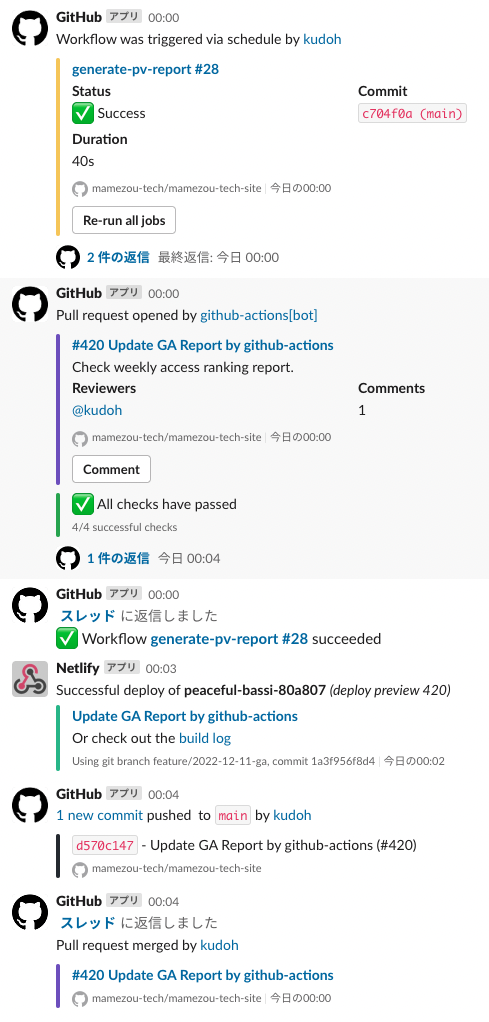
A workflow run, a bot PR, the workflow result, a commit and the merge. This real channel has optional workflow notifications enabled; the sixth post is from Netlify.
 Add CLI sign-in #412
PullPulse keeps PR checks and review state on the original card. Follow-ups stay in its thread. On merge, that same message folds into a receipt.
Same message, after merge · example
 Merged by sam · meridian/api#412 Add CLI sign-in · 3h 48m ready → merge
“As it sends the notifications to the channel, there are multiple entries per PR.”
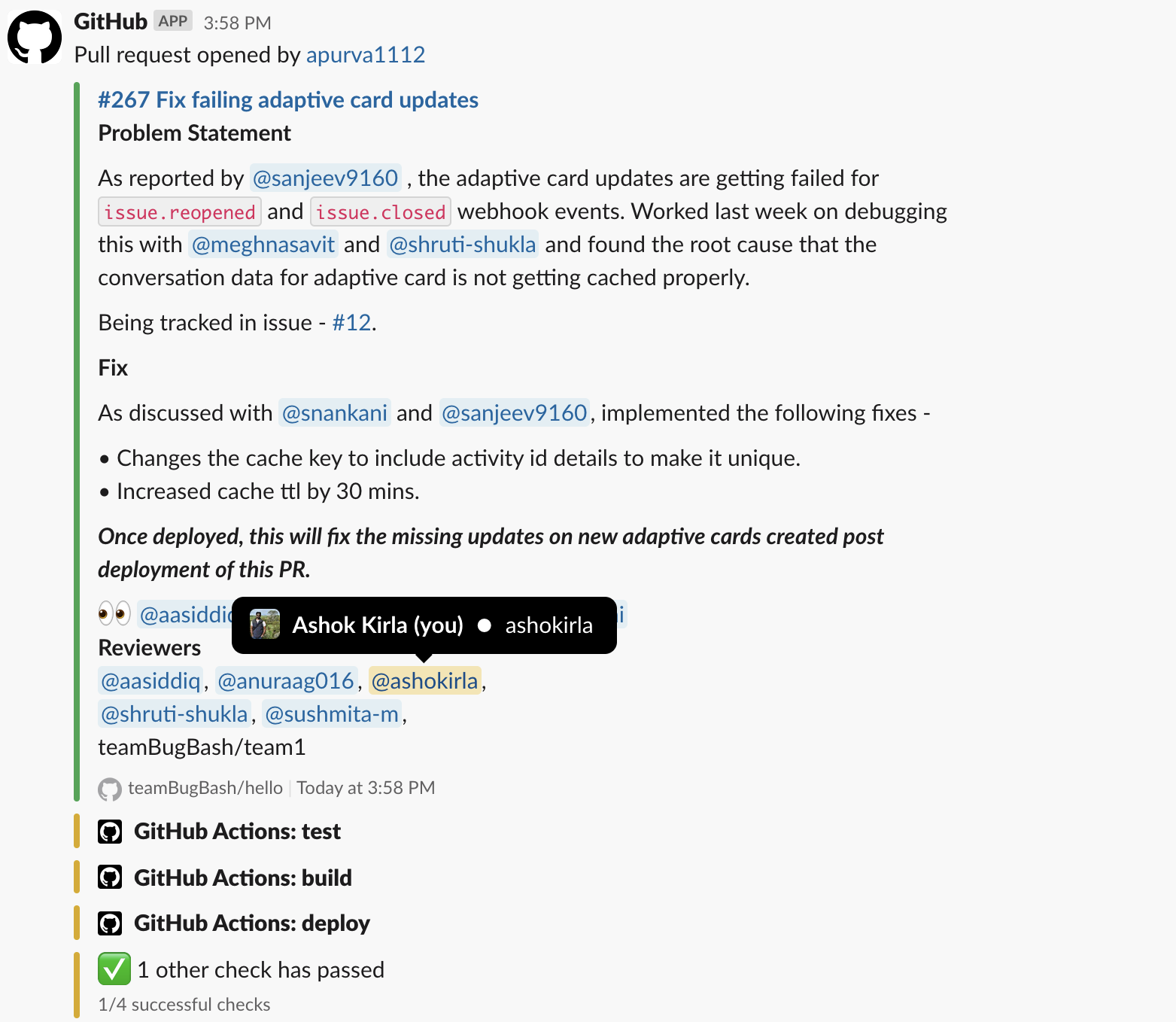
GitHub’s published PR example includes the description, reviewer mentions and checks.
Add CLI sign-in #412The next ask, the size of the change and reasons to look closer. Evidence opens in Details.
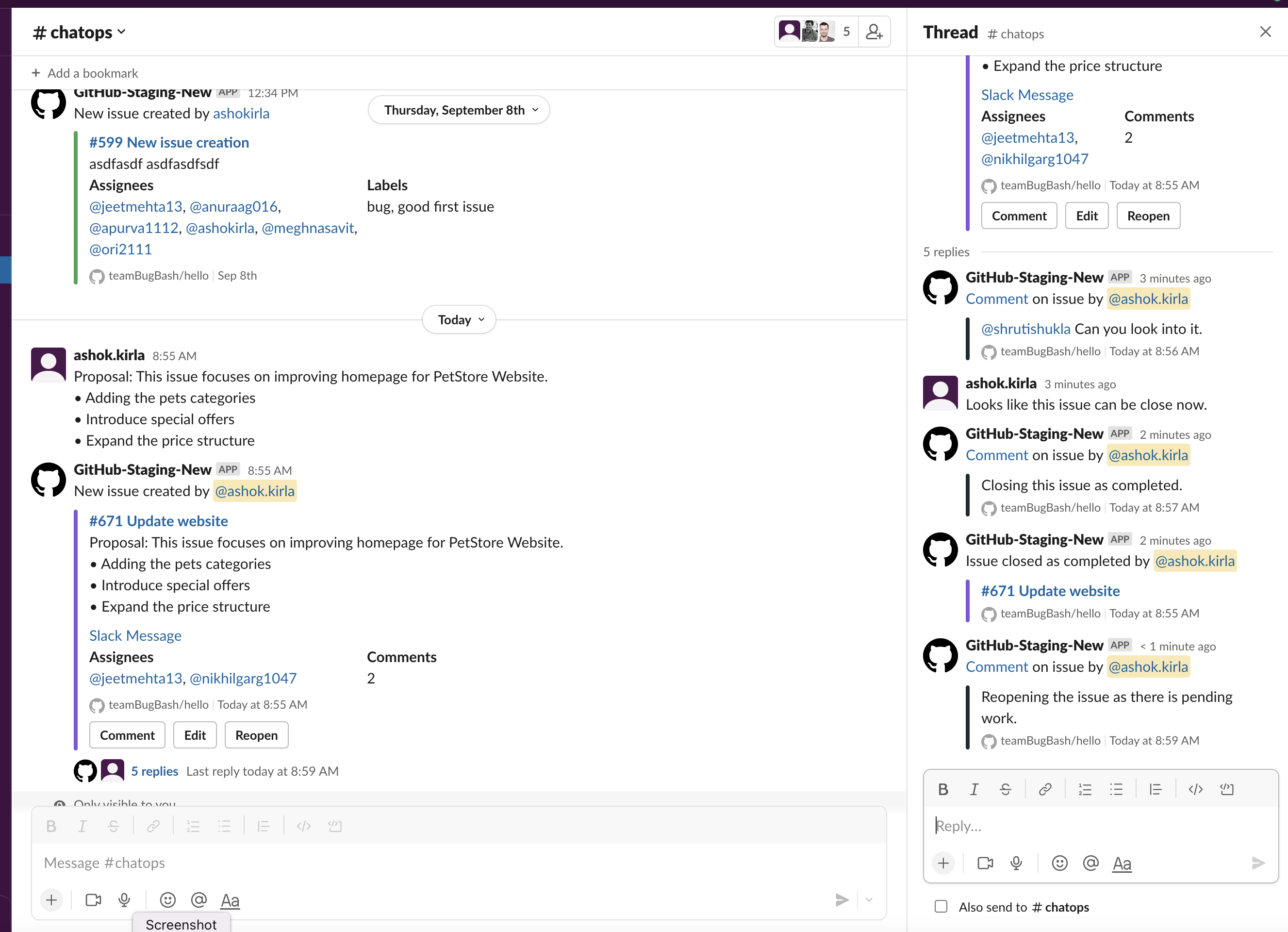
Threads collect the conversation, but GitHub also broadcasts state changes back to the channel. This published issue example shows comments, closing and reopening.
Each PR gets room.
Quiet PRs fold after 48 hours.
One table, edited in place.
Choose the space your queue takes. In board mode, routine PRs share one table and review asks move to DMs.
Sources: a developer’s operations channel and GitHub’s own documentation, published in 2022 and checked September 2026. These are not fresh captures or a same-PR test. GitHub also updates parent messages and threads replies; volume depends on subscriptions. PullPulse cards use our shipping renderer with fictional data; the density diagram is an illustration. GitHub screenshot license · Mamezou source license · GitHub documentation ↗
| Your team’s question | GitHub for Slack | PullPulse |
|---|---|---|
| 01 / PRIORITYWhat deserves a closer look? | PR status, reviewers, labels and checks in the parent card. | A reason to look closer.Four complexity tiers, plus attention flags such as migrations and missing tests, with the paths or facts behind them. The tier does not depend on AI. How review effort is rated → |
| 02 / ROUTINGDoes this belong to my team? | Repository and event subscriptions, with one required-label filter for PRs and issues. GitHub’s label filters ↗ | Route by the change itself.Match paths, authors, labels, base branches and size. Explain shows which rule matched, so a shared repository can serve several teams. Explore routing rules → |
| 03 / ATTENTIONShould this interrupt me now? | Mentions, scheduled reminders and personal real-time alerts. GitHub’s reminder options ↗ | Keep the update. Budget the ping.Per-person notification caps, quiet hours in each person’s timezone and snooze. Suppressing a ping keeps the message available to read. Set notification policies → |
| 04 / VOLUMEWhat happens on a busy day? | Activity grouped into threads beneath updating parent cards. | Choose a density that fits.Cards for individual PRs, compact views and a board edited in place. In board mode, review asks move to DMs; high-tier and unrated PRs can still get their own messages. See the density options → |
| 05 / AGENTSIs agent-opened work ready for a human? | Notifications follow the repository’s configured subscriptions. | Give unattended work its own policy.Hold agent-opened PRs until checks pass, collect them in repository rollups and escalate according to review effort. People using AI editors remain people. Configure agent PR handling → |
If your team can follow its PR activity comfortably, try tuning the native app’s subscriptions and reminders first. It is a sensible fit for straightforward notifications.
Shared repositories, frequent PRs and agent-opened work benefit from explicit routing, review signals and limits on interruptions. That is where PullPulse focuses.
Try PullPulse with one repository and the people who review it.
.pullpulse.yml.About this comparison. Native app details come from GitHub’s integration documentation. PullPulse links describe its own controls. This is a comparison of capabilities, not a measured claim about review speed or notification reduction.
GitHub and Slack are trademarks of their respective owners. PullPulse is an independent product.